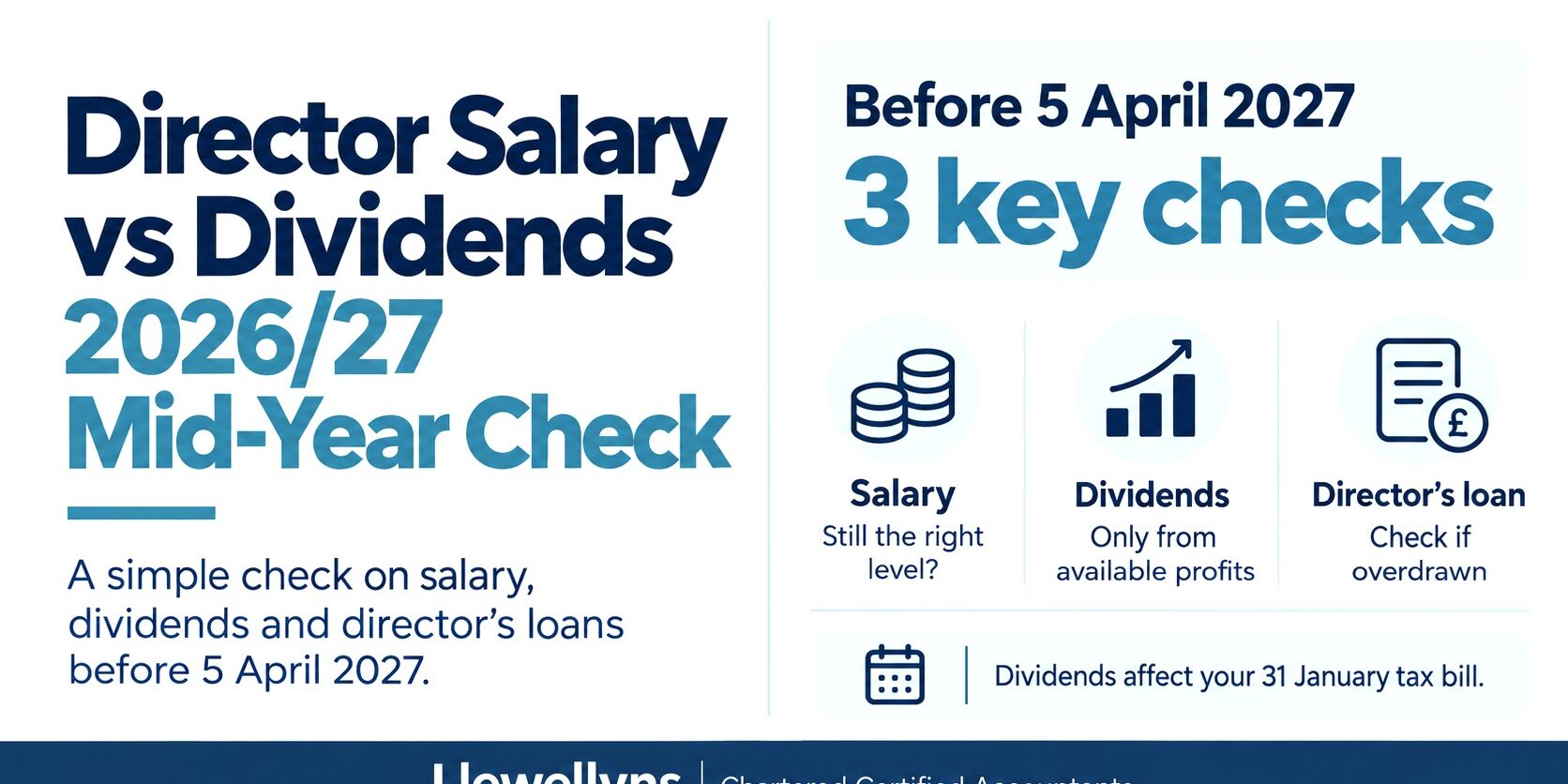
Director Salary vs Dividends 2026/27: A Mid-Year Check Before 5 April 💼💷
“How should I pay myself?”
It’s one of the questions we get asked most by company directors. 😅
And the best time to answer it isn’t in March, when the tax year is nearly over. It’s now, with five months still to go. 👇
🤔 Why check in November?
The 2026/27 tax year runs until 5 April 2027.
A mid-year check means you can:
✅ See how profits are really performing ✅ Adjust dividends before it’s too late ✅ Avoid an unexpected tax bill next January ✅ Spot any problems with your director’s loan account
💷 Step 1: Review your salary
Most directors take a modest salary, then take the rest of their income as dividends.
The right level depends on your circumstances, including other income, National Insurance, whether the company can claim the Employment Allowance, and the impact on your state pension record.
If nothing has changed since the start of the year, you may not need to change anything, but it’s worth a quick check.
📊 Step 2: Check your profits before paying dividends
This is the one that catches people out.
Dividends can only be paid from available profits, not simply because there’s money in the bank account. 😬
A company can have plenty of cash in the bank and still not have the profits to justify a dividend, for example if it’s holding money for VAT, Corporation Tax or customer deposits.
Before you pay yourself a dividend:
✅ Check the company has enough distributable profits ✅ Hold a board meeting and record the decision ✅ Issue a dividend voucher each time
If you’re not sure, ask us before you pay. It’s much easier than putting it right afterwards.
📈 Step 3: Remember dividend tax rates have gone up
Since 6 April 2026, the tax rates on dividends for basic and higher rate taxpayers have increased by 2 percentage points.
That means the same dividend now costs you more tax than last year.
It makes planning more important, especially if you’re close to a tax band threshold. A small change in timing can sometimes make a real difference.
📒 Step 4: Look at your director's loan account
If you’ve taken more money out of the company than you’ve put in, your director’s loan account may be overdrawn.
That can trigger extra tax if it isn’t cleared nine months and one day after the company’s year end.
For example:
💷 You owe the company £10,000 at year end 💷 It isn’t repaid in time 💷 The company could face a tax charge of over £3,000
(This is just an illustration. Your own position will depend on your circumstances.)
It’s much better to know now than at the deadline.
🧾 Step 5: Don't forget Self Assessment
Dividends are reported on your personal tax return, and any tax due is normally paid by 31 January.
That’s why the way you pay yourself affects your January bill, and the payments on account that follow. Planning now helps you set aside the right amount, so it doesn’t come as a shock. 😬
✅ A quick director's checklist
✅ Is your salary still the right level? ✅ Does the company have enough profit for the dividends you’re planning? ✅ Are your dividend vouchers and minutes up to date? ✅ Is your director’s loan account in credit? ✅ Have you set money aside for your January tax bill?
If any answer is “not sure”, it’s worth a conversation.
📞 Want us to take a look?
At Llewellyns Chartered Certified Accountants, we help company directors plan how to pay themselves tax-efficiently and legally, in plain English, with no tax schemes. 😊
We offer a free, no-pressure initial chat, so you can find out where you stand.
📍 Cardiff: 02920 624230 📍 Tonypandy: 01443 303230 📧 info@llewellyns.co.uk
Please Contact Us To Arrange Your Appointment Before You Arrive
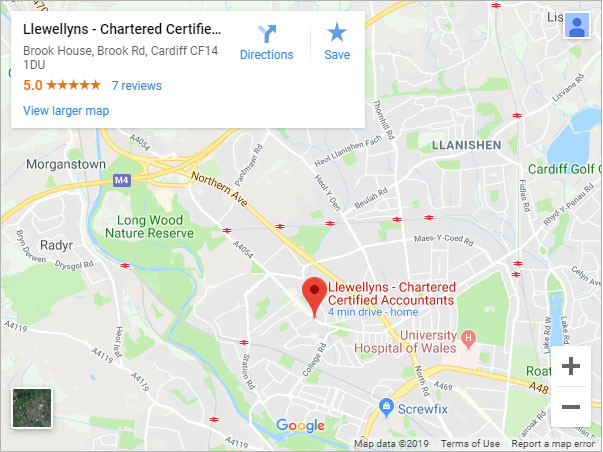
Find Us In Cardiff
Tel : 029 2062 4230
Find Us In Tonypandy
Tel : 01443 303230