Self Assessment Deadline 2027: Why You Should Start Now, Not on 30 January 📅💷
t’s 20 October.
The Self Assessment deadline feels like it’s miles away. 😅
It isn’t.
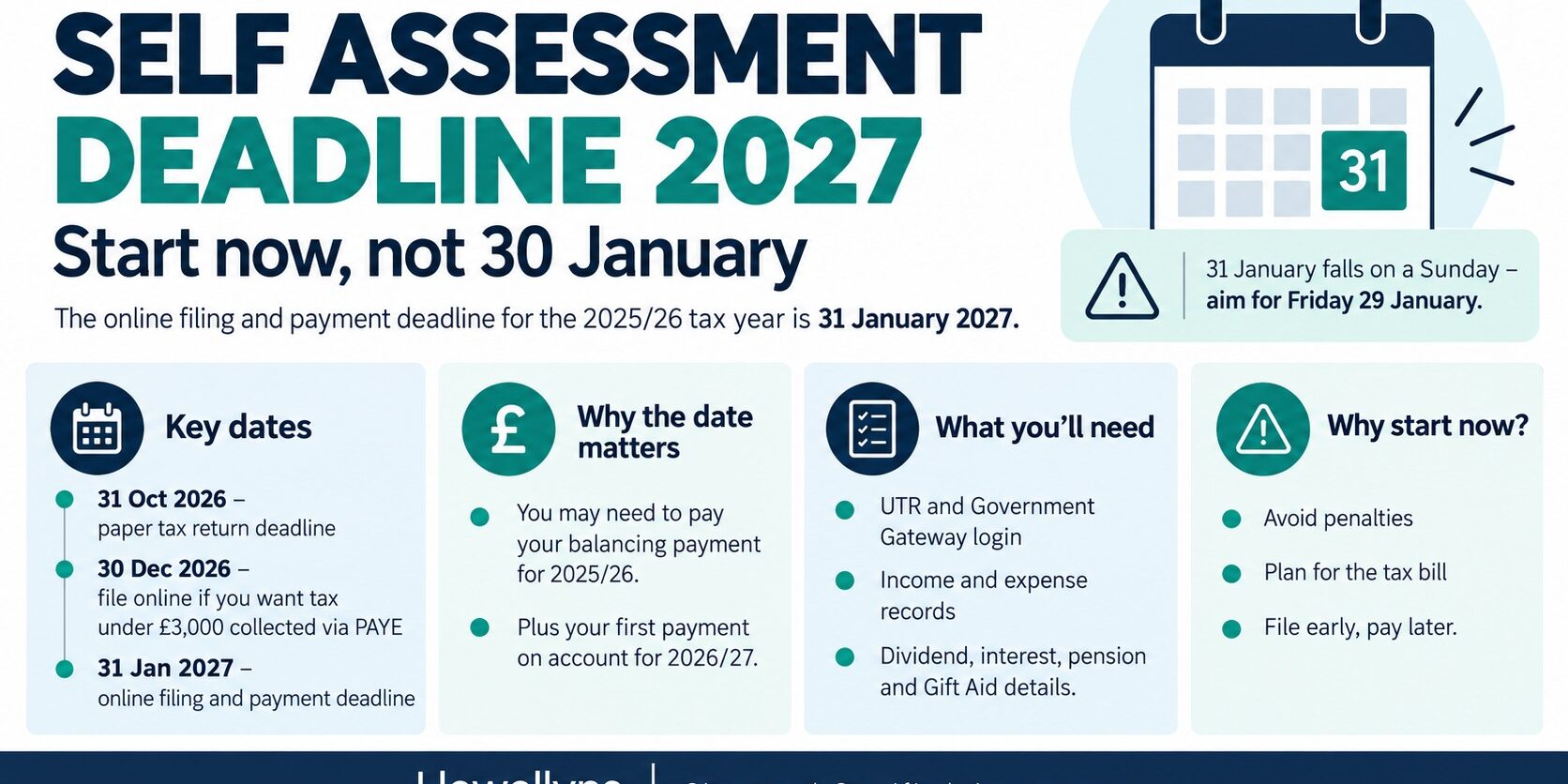
The online filing and payment deadline for the 2025/26 tax year is 31 January 2027, which is just over 100 days from today.
And because 31 January falls on a Sunday this year, the practical deadline for most people is really Friday 29 January. 🚨
Here’s what you need to know, and why now is the best time to get started. 👇
📆 The dates that matter
For the 2025/26 tax year (6 April 2025 to 5 April 2026):
🔹 31 October 2026: deadline for paper tax returns 🔹 30 December 2026: online filing deadline if you want tax under £3,000 collected through your PAYE tax code 🔹 31 January 2027: online filing deadline and deadline to pay any tax due
Most people file online, so 31 January is the date to remember.
💷 Why 31 January is about more than the tax return
This is the part that catches people out.
On 31 January you may need to pay:
✅ Your balancing payment for 2025/26 ✅ Your first payment on account for 2026/27
Payments on account are advance payments towards next year’s tax bill, usually 50% of last year’s bill, with the second instalment due in July.
Here’s a simple example:
If your 2025/26 tax bill is £8,000, you might need to pay:
💷 £8,000 balancing payment 💷 £4,000 first payment on account
That’s £12,000 due on one day. 😬
(This is just an illustration. Your own figures will depend on your circumstances.)
It’s one of the biggest reasons we encourage clients to look at their numbers early, not at the last minute.
🧾 What you'll need to complete your return
Depending on your circumstances, you may need:
✅ Your Unique Taxpayer Reference (UTR) and Government Gateway login ✅ Self-employed income and expenses for the year ✅ Rental income and property expenses ✅ Dividends and bank or savings interest ✅ Pension contributions and Gift Aid donations ✅ Details of any student loan plan ✅ Child Benefit information, if the High Income Child Benefit Charge could apply
Don’t worry if that looks like a lot. 😅
The bigger problem is trying to find it all in the last week of January.
⚠️ What happens if you miss the deadline?
HMRC penalties can add up quickly.
For late returns:
🔹 An immediate £100 penalty, even if you don’t owe any tax 🔹 Daily penalties of £10 per day after three months, up to £900 🔹 Further penalties at 6 months and 12 months
For late payment:
🔹 Interest on unpaid tax 🔹 Additional penalties at 30 days, 6 months and 12 months
A £100 penalty for a return that only needed a bit of organisation is a very expensive way to learn the date. 😅
✅ Why starting now helps
Filing early gives you:
🔹 Time to find missing information such as a lost P60 or statement 🔹 Time to plan for the January bill, so it’s no surprise 🔹 A chance to make better decisions, for example about pension contributions 🔹 Less stress when HMRC’s systems and phone lines are at their busiest
You can also file early and pay later. Your return can be submitted now even though the tax isn’t due until 31 January.
🤔 Do you actually need to complete a return?
You may need to if you:
🔹 Are self-employed or a sole trader 🔹 Receive rental income 🔹 Are a company director with other income 🔹 Have significant savings or investment income 🔹 Have untaxed income that isn’t collected through PAYE 🔹 Have been asked to by HMRC
If you’re unsure, it’s always better to check than to find out later. If you needed to register and missed the 5 October deadline, contact us as soon as possible and we can help.
📞 Want us to take care of it?
At Llewellyns Chartered Certified Accountants, we prepare Self Assessment returns for sole traders, landlords, directors and individuals, and we’ll tell you what the bill is likely to be before it lands.
You’ll also deal with a real, local accountant who explains things in plain English. 😊
We offer a free, no-pressure initial chat, so you can find out where you stand.
📍 Cardiff: 02920 624230 📍 Tonypandy: 01443 303230 📧 info@llewellyns.co.uk
Please Contact Us To Arrange Your Appointment Before You Arrive
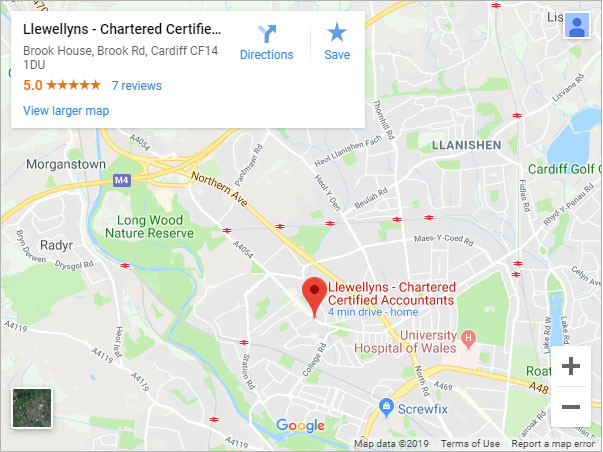
Find Us In Cardiff
Tel : 029 2062 4230
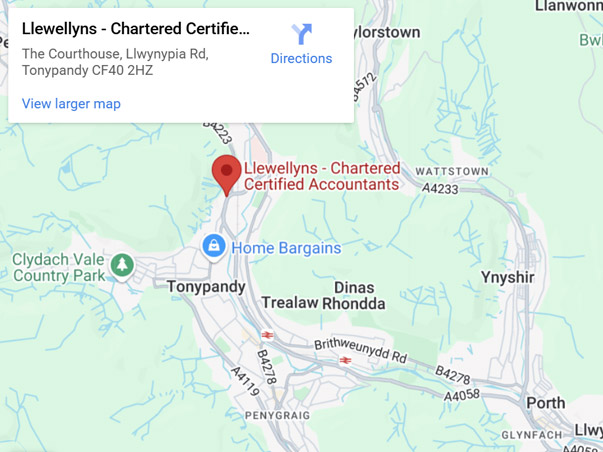
Find Us In Tonypandy
Tel : 01443 303230