Do You Need to Register for Self Assessment? The 5 October Deadline Explained 📅💷
5 October 2026 is an important date for anyone who became self-employed, started receiving rental income or otherwise found themselves with income that may need to be reported to HMRC during the 2025/26 tax year.
If you need to complete a Self Assessment Tax Return for 2025/26 and haven’t previously registered, you generally need to tell HMRC by 5 October 2026.
And with the deadline now only a few weeks away, it’s worth checking sooner rather than later. 👀
🤔 What actually happens on 5 October?
First things first, 5 October is not the deadline for submitting your Tax Return or paying your tax bill.
It’s the deadline for telling HMRC that you need to complete a Self Assessment Tax Return if you haven’t already done so.
For the 2025/26 tax year, which ran from 6 April 2025 to 5 April 2026:
📅 5 October 2026 – deadline to notify HMRC that you need to complete a Tax Return
📅 31 October 2026 – deadline for most paper Tax Returns
📅 30 December 2026 – deadline if you want HMRC to collect eligible Self Assessment tax through your PAYE tax code
📅 31 January 2027 – deadline for online Tax Returns and payment of any Self Assessment tax due
So no, we’re not trying to ruin Christmas by telling you your Tax Return is due in three weeks! 🎄😂
But if you’ve recently started earning income that HMRC doesn’t already know about, 5 October is the date you need to be aware of.
👷 1. You started working for yourself
This is probably the most common reason somebody needs to register.
If you started operating as a sole trader during 2025/26 and your gross trading income exceeded £1,000, you will normally need to report that income to HMRC.
That could include:
🔹 Starting a new business
🔹 Freelancing alongside your normal job
🔹 Consultancy work
🔹 Building or construction work
🔹 Beauty and hairdressing services
🔹 Online businesses
🔹 Weekend or evening work
🔹 Essentially any other form of self-employment
Importantly, the £1,000 figure generally refers to your gross trading income before expenses, rather than your profit.
So if you received £5,000 from customers but had £4,500 of expenses, the fact that your profit was only £500 doesn’t necessarily mean you can ignore Self Assessment.
🏠 2. You started receiving rental income
Bought a rental property? Started letting out a property you already owned?
You may need to tell HMRC.
Rental income isn’t automatically taxed through PAYE in the same way as your salary, so landlords will often need to report their property income through Self Assessment.
This can include income from:
🏡 Residential property
🏢 Commercial property
🌍 Overseas property
🏠 Renting out part of a property
There are various allowances and rules which can affect whether tax is actually due, but don’t assume that no tax bill means nothing needs to be reported.
💼 3. You became a partner in a business
If you became a partner in a business partnership during the year, you will generally need to complete an individual Self Assessment Tax Return.
The partnership itself will usually also have separate reporting obligations.
This catches people out surprisingly often because it’s easy to assume the partnership’s accountant dealing with the business accounts automatically takes care of everything personally too.
Unfortunately, HMRC likes paperwork almost as much as accountants do. 📚
📈 4. You disposed of an asset and may have made a taxable capital gain
Sold shares? A second property? Cryptocurrency? An investment? Another valuable asset?
Selling or otherwise disposing of an asset for more than its allowable cost can result in a capital gain. However, a disposal does not automatically mean that Capital Gains Tax is due or that a Self Assessment Tax Return is required.
The tax treatment depends on factors including:
🔹 The type of asset sold
🔹 The purchase and disposal values
🔹 Allowable costs and reliefs
🔹 Whether the asset was exempt
🔹 Your available annual exempt amount
🔹 Your wider tax position
For the 2025/26 tax year, if your total taxable gains exceed your available annual exempt amount, you may need to report the gain and pay Capital Gains Tax. You may also need to report gains below that amount if the total disposal proceeds exceed the relevant reporting threshold for the year.
Some gains may need to be reported through Self Assessment, while certain UK residential property gains have separate reporting and payment rules, including a requirement to report most taxable residential property gains within 60 days of completion.
So, rather than assuming that every profitable sale creates a Self Assessment obligation, or that no tax is due because the gain is below the annual exempt amount, check the specific rules for the asset and transaction involved.
💰 5. You received untaxed income
You don’t necessarily need to run a business to fall into Self Assessment.
HMRC lists a number of types of untaxed income which can create a reporting requirement, including:
🔹 Tips and commission
🔹 Savings income
🔹 Dividend income
🔹 Property income
🔹 Foreign income
🔹 Certain other sources of taxable income
Exactly whether you need a Tax Return depends on the amounts involved and your wider circumstances.
This is one of those situations where the answer to “Do I need to declare this?” is often:
“It depends.” 😅
🌍 6. You received foreign income
Foreign income is another area where people can unintentionally get themselves into difficulty.
This might include:
🌎 Overseas rental income
💰 Foreign investment income
🏦 Interest from overseas bank accounts
📈 Foreign dividends
💼 Income from work carried out abroad
The UK tax treatment depends on your circumstances, including your UK tax residence position and the type of income received.
If you received overseas income during 2025/26 and aren’t sure whether it needs to be declared, we’d recommend getting advice rather than simply leaving it off your return.
👶 7. You may owe the High Income Child Benefit Charge
The High Income Child Benefit Charge can create an additional tax liability where Child Benefit has been received and an individual’s adjusted net income exceeds the relevant threshold.
Depending on your circumstances and whether the charge is already being dealt with through PAYE, you may need to report it to HMRC.
This is an area particularly worth reviewing because the rules and thresholds have changed in recent years.
💻 8. You started a side hustle
The phrase “side hustle” covers just about everything these days!
Perhaps you’ve been:
📦 Selling products online
🎨 Making and selling handmade goods
📸 Doing photography
🚗 Providing services in your spare time
📱 Earning money through social media
🛠️ Doing occasional jobs outside your employment
Not every £1 you receive automatically creates a tax bill.
But if what you’re doing amounts to trading and your gross trading income exceeds the available trading allowance, you may need to register.
Having a normal PAYE job doesn’t prevent you from also needing a Tax Return.
🏦 9. You received investment income outside your normal salary
More people are investing than ever before, and that can mean income from:
📈 Shares
💷 Dividends
🏦 Savings
🌍 Overseas investments
ISAs are generally tax-free, but investments held outside tax-advantaged accounts can create Income Tax or Capital Gains Tax issues.
Depending on the amounts involved, HMRC may need additional information from you.
📝 10. HMRC has told you to complete a Tax Return
This one sounds obvious, but it’s worth saying!
If HMRC has issued you with a notice requiring you to file a Tax Return, don’t simply ignore it because you think you shouldn’t need one.
If your circumstances have changed and you genuinely no longer meet the Self Assessment criteria, you can ask HMRC to remove the requirement.
But until HMRC agrees, you shouldn’t assume the return can simply be left outstanding.
😬 What happens if I miss the 5 October deadline?
Missing 5 October doesn’t automatically mean you’ll wake up on 6 October with a £100 penalty sitting in your HMRC account.
However, if you register late and tax ultimately remains unpaid after the relevant deadline, you could face a failure-to-notify penalty.
The sensible answer is therefore simple:
If you think you might need to register, deal with it now rather than waiting until January.
It also gives you much more time to:
✅ Get your records together
✅ Calculate your tax liability
✅ Put money aside for the bill
✅ Deal with any missing information
✅ Ask questions before everyone remembers Self Assessment exists on 30 January! 😅
💷 Do I have to pay my tax as soon as I submit the return?
No.
You can complete your 2025/26 Tax Return now and still generally have until 31 January 2027 to pay the tax due.
In fact, submitting earlier can be useful because it means you know exactly how much you need to find.
For example, if your Tax Return is completed in September and shows a £4,000 liability, you’ve got several months to prepare for it rather than discovering the figure a few days before the payment deadline.
Filing early doesn’t mean paying early.
⚠️ I've completed Tax Returns before, do I need to register again?
Not necessarily.
If you’re already registered for Self Assessment and HMRC is expecting a return, you don’t normally need to register from scratch each year.
However, if you were previously registered but didn’t need to file a 2024/25 Tax Return, HMRC says you may need to reactivate your Self Assessment record for 2025/26.
This is another reason not to leave everything until January.
✅ Not sure whether you need to register?
Self Assessment isn’t limited to full-time sole traders.
Changes in your property income, investments, side businesses, partnerships and other sources of income can all affect whether HMRC expects a Tax Return.
And importantly, registering for Self Assessment and actually owing tax are two different things.
At Llewellyns, we can review your circumstances, establish whether a Tax Return is required, register you with HMRC where necessary and deal with the return from start to finish.
📅 With the 5 October deadline approaching, now is the perfect time to check.
If anything changed during the 2025/26 tax year and you’re unsure whether HMRC needs to know about it, get in touch with the team at Llewellyns Chartered Certified Accountants.
📍 Cardiff: 02920 624230
📍 Tonypandy: 01443 303230
📧 info@llewellyns.co.uk
Please Contact Us To Arrange Your Appointment Before You Arrive
Find Us In Cardiff
Tel : 029 2062 4230
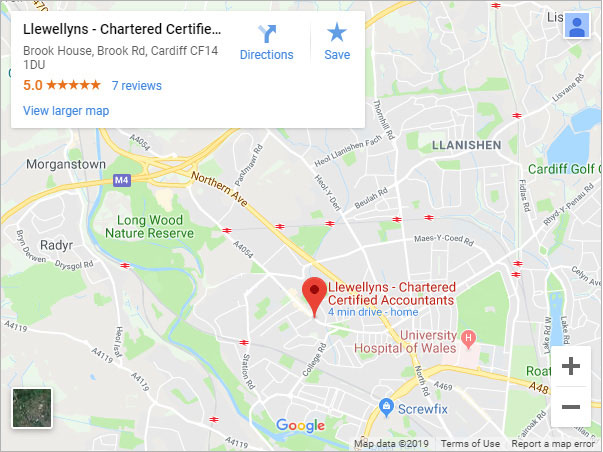
Find Us In Tonypandy
Tel : 01443 303230