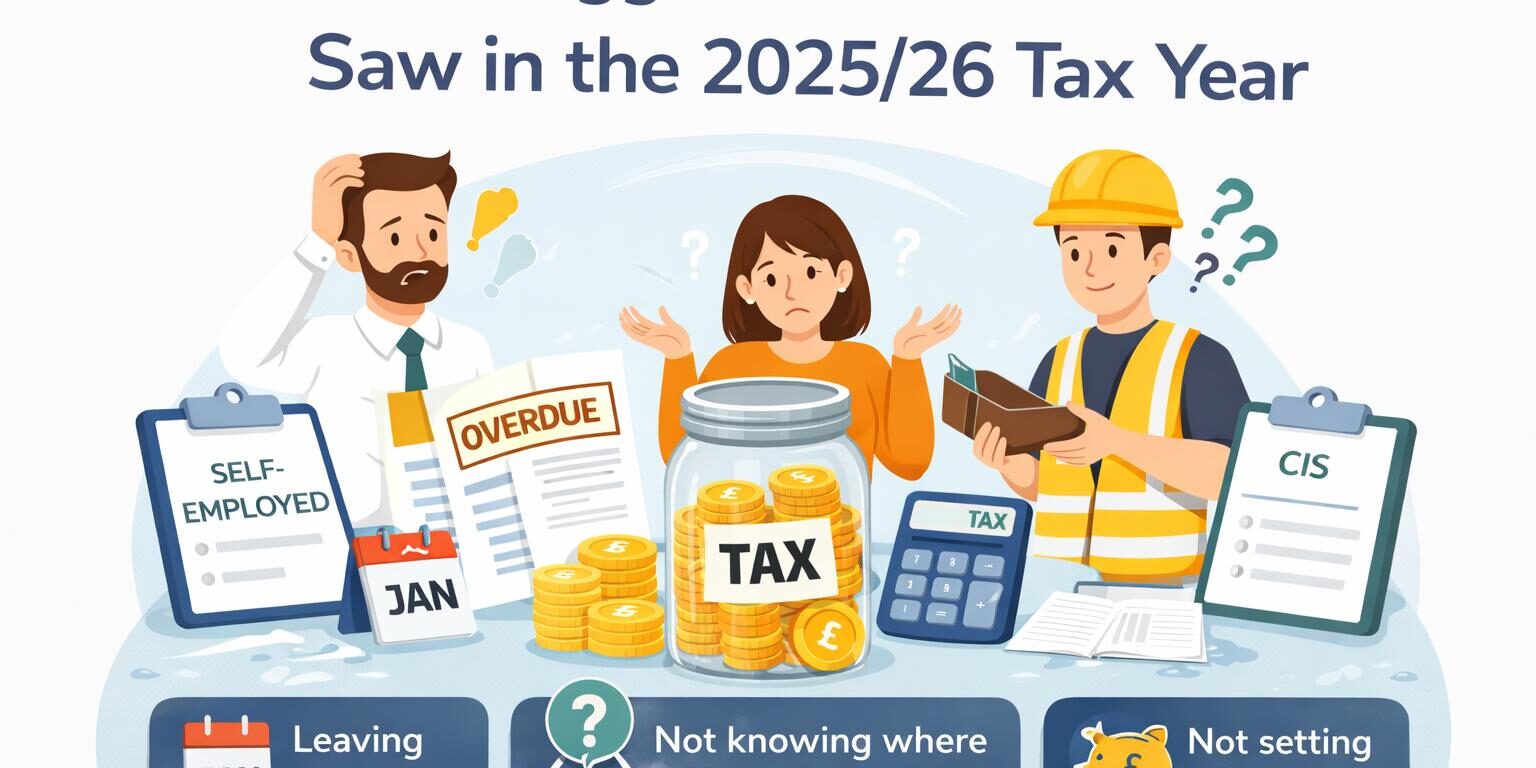
The Biggest Mistakes We Saw in the 2025/26 Tax Year
Now that the tax year has come to an end, there’s usually a bit of breathing space.
For us, it’s also a natural point to reflect.
Not on anything dramatic, but on the patterns we see every year. The small things that, when left unchecked, tend to cause the most stress later on.
None of these are unusual, and most are easily avoidable.
But they come up time and time again.
Here are some of the biggest ones we saw over the 2025/26 tax year 👇
⏰ Leaving Things Too Late
This is by far the most common.
Very few people plan to leave things until January, it just happens gradually.
- records fall behind
- questions get pushed back
- things feel manageable… until they’re not
By the time everything needs to be finalised, there’s a lot to do in a short space of time.
The pressure isn’t usually caused by the work itself, it’s the timing.
📊 Not Knowing Where Things Stand
A surprising number of people go through most of the year without a clear picture of:
- how much profit they’ve made
- how much tax is building up
- whether anything needs attention
Without that visibility, it’s very difficult to make informed decisions.
Everything feels fine… until it suddenly isn’t.
💷 Not Setting Money Aside for Tax
This is one of the biggest causes of stress we see in January.
Tax builds up throughout the year, but unless it’s set aside separately, it’s very easy for that money to get used elsewhere.
We often hear:
“I didn’t realise it would be that much.”
In most cases, it’s not the amount itself, it’s the fact it wasn’t planned for.
🧾 Records That Aren’t Quite Complete
This doesn’t usually mean everything is missing.
It’s more often:
- a few gaps here and there
- expenses not fully recorded
- uncertainty around what should be included
Individually, these are small issues.
But when they build up, they take time to resolve, especially close to a deadline.
👷♂️ CIS Confusion
For subcontractors, this continues to come up every year.
Common misunderstandings include:
- assuming all tax is already covered by CIS deductions
- not keeping proper records of income and expenses
- uncertainty around refunds
CIS can work well when everything is recorded properly, but without that, it’s easy for things to become unclear.
🔄 Mixing Personal and Business Finances
This is something that often starts out of convenience.
Using one account for everything can work in the short term, but over time it makes things harder to track:
- what’s business-related
- what’s personal
- what’s allowable
Separating things doesn’t need to be complicated, but it makes everything clearer.
🧠 Trying to Figure Everything Out Alone
There’s a lot of information available, and it’s easy to feel like you should be able to manage everything yourself.
In reality, most of the issues we see come from uncertainty:
- not being sure what to do
- second-guessing decisions
- leaving things rather than asking
A quick conversation early on often prevents much bigger problems later.
🌱 What These All Have in Common
None of these are major on their own.
They’re small, gradual things that build up over time.
That’s why they’re so easy to overlook, until they all come together at once.
💡 Final Thoughts
Every tax year follows a similar pattern.
The people who feel most in control aren’t doing anything particularly complex, they’ve just stayed slightly ahead as the year progresses.
- keeping things up to date
- setting money aside early
- checking in regularly
- asking questions when needed
At Llewellyns, we see the difference this makes every year.
Not in dramatic ways, but in how manageable everything feels when January comes around.
Please Contact Us To Arrange Your Appointment Before You Arrive
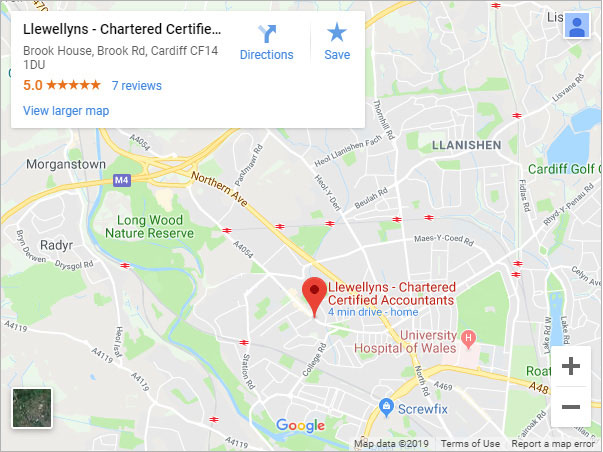
Find Us In Cardiff
Tel : 029 2062 4230
Find Us In Tonypandy
Tel : 01443 303230