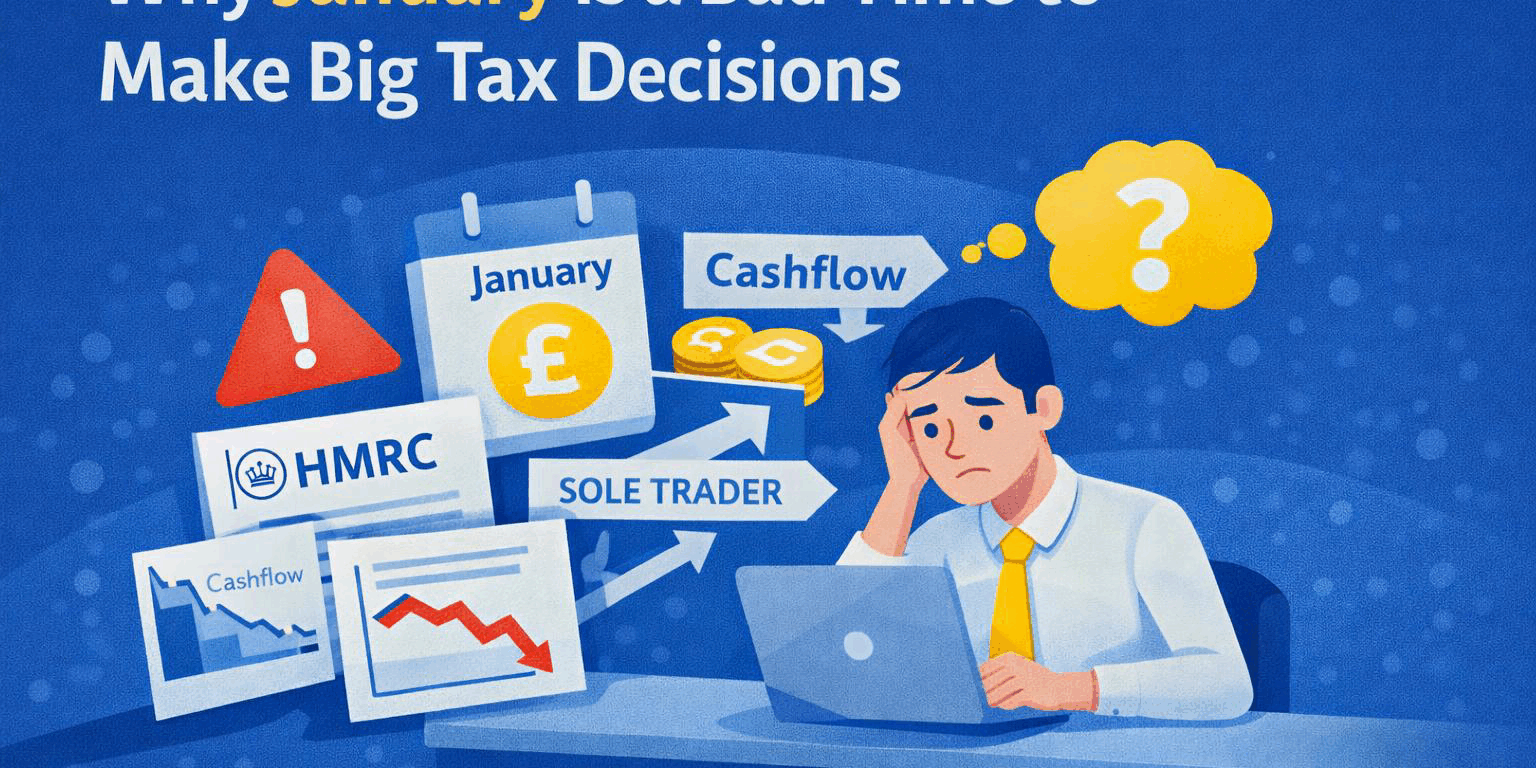
🧠 Why January Is a Bad Time to Make Big Tax Decisions
January often feels like a natural time to “fix” things.
The year has just ended, tax bills are landing, and many business owners start questioning whether they’ve made the right decisions 🤔.
It’s very common to hear:
“Should I change my business structure?”
“Should I stop being a sole trader?”
“Should I take more salary or dividends?”
“Should I do something drastic to reduce tax?”
While these are sensible questions, January is usually the worst time to answer them.
In this blog, we explain why big tax decisions made in January are often rushed, reactive, and based on incomplete information — and why waiting usually leads to better outcomes.
📅 January is emotionally charged
January comes with a lot of pressure:
Self Assessment deadlines
Tax payments falling due
Cashflow often at its weakest
Christmas spending still fresh
That combination makes it easy to:
Overreact to numbers
Make decisions based on stress
Focus on short-term pain rather than long-term planning 😬
Big tax decisions made under pressure rarely age well.
📊 You’re looking backwards, not forwards
In January, most of the information in front of you relates to the year that has already ended.
That means:
The tax bill can’t be changed
Past profits are already fixed
Decisions now won’t affect what’s already due
Making structural changes based purely on last year’s figures can lead to solutions that don’t suit your business going forward.
Good tax planning is forward-looking — January is mostly backward-looking 🔍.
🔁 January decisions are often reactive
We regularly see business owners in January wanting to:
Change from sole trader to limited company
Alter salary and dividend strategies
Make major pension or investment decisions
Restructure purely to reduce tax
These changes are sometimes right — but January is rarely the right moment to decide them.
Reactive decisions are often driven by:
A single high tax bill
One difficult cashflow month
A comparison with someone else’s situation
Tax decisions should be strategic, not emotional.
📈 One month doesn’t define your business
January is not a “normal” month.
It’s affected by:
Seasonal trading patterns
Delayed customer payments
Concentrated tax liabilities
Judging your business — or its structure — based on January alone can give a distorted picture.
A quieter or more expensive January doesn’t mean:
Your business is failing
Your tax position is wrong
You need to overhaul everything
It usually just means… it’s January.
🧩 Tax planning works best with breathing space
The best tax planning happens when:
You have a clear view of the year ahead
Cashflow has stabilised
Decisions aren’t being rushed
Options can be compared properly
That’s usually after January, once deadlines have passed and there’s time to think clearly 🧘.
This allows planning to focus on:
Sustainability
Profitability
Cashflow
Long-term efficiency
Not just reducing the next bill at any cost.
⚠️ What January is good for
While January isn’t ideal for big decisions, it is useful for:
✔ Reviewing what happened last year
✔ Understanding where the pressure points are
✔ Identifying questions that need answering
✔ Flagging areas to plan properly later
Think of January as a diagnosis month, not a treatment month.
🌱 A better approach to tax decisions
A more effective approach is to:
1️⃣ Get through January calmly
2️⃣ Understand the numbers without panic
3️⃣ Identify what you’d like to improve
4️⃣ Plan changes at the right time
That way, decisions are made deliberately — not defensively.
💬 Final thoughts
January can make even well-run businesses feel like something needs fixing.
In reality, most of the time it just needs context, clarity, and a bit of distance.
Big tax decisions are important — which is exactly why they shouldn’t be made in the most pressured month of the year.
At Llewellyns, we believe tax planning works best when it’s calm, considered, and aligned with where your business is heading — not just where it’s been.
Please Contact Us To Arrange Your Appointment Before You Arrive
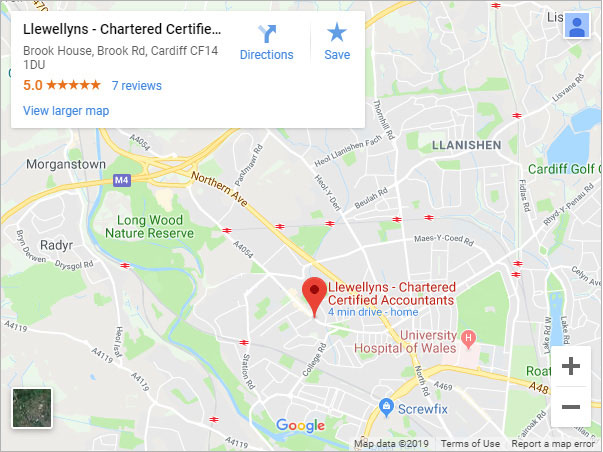
Find Us In Cardiff
Tel : 029 2062 4230
Find Us In Tonypandy
Tel : 01443 303230