📊 Why Your January Tax Bill Feels Higher Than Expected (Even If Nothing Has Changed)
January is the month when many business owners open their tax calculation and think:
“That can’t be right.”
Even when income hasn’t increased, expenses look sensible, and nothing major has changed, the January tax bill often feels much higher than expected 😬.
In most cases, this isn’t because anything is wrong — it’s down to timing, how tax is collected, and how January fits into the wider financial year.
In this blog, we explain why January bills often feel worse than they really are, and what’s actually going on behind the numbers.
📅 January is when several things hit at once
One of the biggest reasons January feels expensive is simply because multiple payments fall together.
Depending on your circumstances, your January bill may include:
Income tax for the previous tax year
National Insurance (for sole traders)
Capital Gains Tax (if applicable)
Payments on account towards the next tax year
Even if each element is correct on its own, seeing them combined into one figure can be a shock 💷.
🔁 Payments on account make the bill feel bigger
Payments on account are one of the most common reasons people feel their January bill is “too high”.
In simple terms, payments on account are advance payments towards your next tax bill, based on the previous year’s results.
This means your January payment can include:
The remaining balance for the year just ended, plus
A contribution towards the following year
So even if your income hasn’t increased, the structure of the payment can make it feel much larger than expected.
🎄 Christmas timing doesn’t help
January comes straight after Christmas — a time when many businesses have:
Higher personal spending
Slower trading
Delayed customer payments
So while the tax bill relates to the previous year, you’re often paying it at a point when cashflow is at its weakest.
That contrast makes the bill feel heavier than it would at another time of year 😟.
📈 Profit and cash aren’t the same thing
Another common issue is the difference between profit and cash.
You can be profitable on paper, but still feel short of cash in January because:
Tax is paid later than the income was earned
VAT, PAYE or other liabilities are also due
Customer payments may be slower at the start of the year
So the tax bill isn’t necessarily “wrong” — it’s just arriving at an awkward moment.
🧠 Expectations play a big role
Many business owners expect January’s bill to be similar to the previous year.
But even small changes can affect the figure, such as:
A modest increase in profit
Fewer allowable expenses
Changes to National Insurance thresholds
Payments on account kicking in for the first time
Individually these don’t feel dramatic, but together they can move the number more than expected.
❌ It doesn’t usually mean you’ve done something wrong
It’s important to say this clearly:
A higher-than-expected January tax bill does not automatically mean a mistake has been made.
In most cases, it’s a combination of:
Timing
Structure of the tax system
Cashflow pressure
Expectations vs reality
That’s why understanding why the bill looks the way it does is often more useful than focusing on the number alone.
🤔 What should you do if the bill feels unmanageable?
If paying the full amount in January feels difficult:
Don’t ignore it 🚨
Don’t assume nothing can be done
Don’t panic
There may be options available, depending on your circumstances, but these are always better explored early, rather than close to the deadline.
🌱 A calmer way to approach January
January will probably always feel like a heavy month for tax — but it doesn’t have to be overwhelming.
A sensible approach is to:
Understand what makes up the bill
Separate cashflow pressure from profitability
Plan ahead where possible
Ask questions early if something doesn’t look right
That clarity alone often reduces a lot of unnecessary stress.
💬 Final thoughts
If your January tax bill feels higher than expected, you’re not alone — and it doesn’t automatically mean anything has gone wrong.
In most cases, it’s about timing, structure, and context, rather than a sudden change in your business.
At Llewellyns, we aim to keep tax and accounting clear, practical, and calm, especially during busy periods like January.
If you’re unsure about your position, or would like help understanding your tax bill, it’s always better to deal with it sooner rather than later.
Please Contact Us To Arrange Your Appointment Before You Arrive
Find Us In Cardiff
Tel : 029 2062 4230
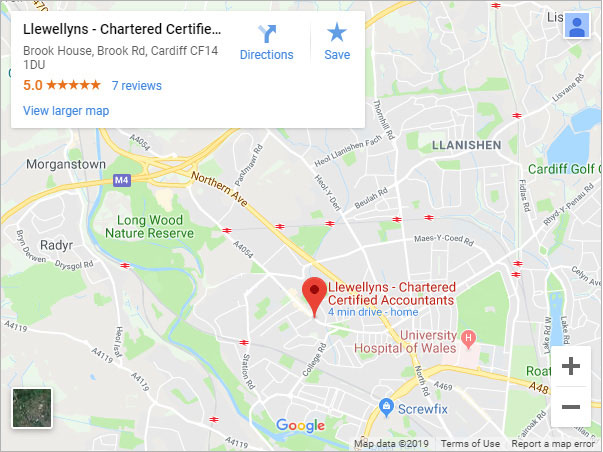
Find Us In Tonypandy
Tel : 01443 303230