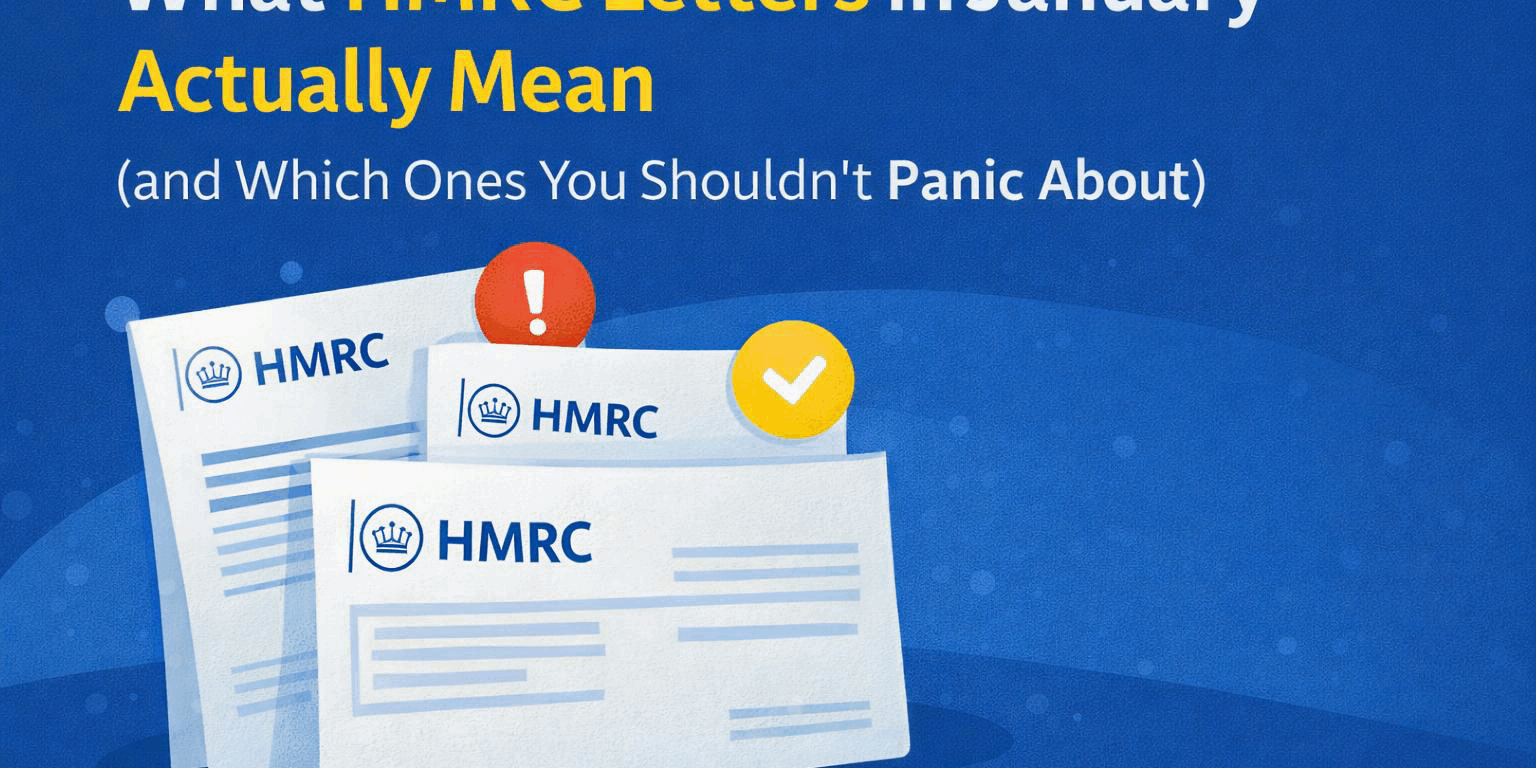
📬 What HMRC Letters in January Actually Mean (and Which Ones You Shouldn’t Panic About)
January is the month when many business owners receive a letter from HMRC and immediately think:
“What have I done wrong?” 😟
In reality, most HMRC letters sent in January are routine, automated, or purely informational. They may not require urgent action — and they certainly don’t always mean there’s a problem.
In this blog, we explain the most common HMRC letters people receive in January, what they usually mean, and which ones you don’t need to panic about.
📅 Why January brings more HMRC letters
January is a busy time for HMRC because it’s when:
Self Assessment returns are being submitted
Tax payments become due
Systems automatically issue reminders and confirmations
As a result, many letters are generated automatically, not because HMRC has identified an issue.
Unfortunately, HMRC letters aren’t always written in the clearest or calmest language — which is why they often cause unnecessary worry 😬.
📄 Common HMRC letters you might receive in January
📌 1. Self Assessment reminders
These are very common in January.
They’re usually sent to:
Remind you to submit your tax return
Confirm a deadline is approaching
Even if:
Your return is already being dealt with, or
You’ve recently submitted it
…the reminder may still be issued automatically.
💡 These letters are not an accusation — just a prompt.
📌 2. Tax calculation summaries
You may receive a letter confirming:
How your tax bill has been calculated
What amount is due
When payment is required
This often arrives after a return has been submitted.
While the figure can be unsettling, the letter itself is usually just confirmation — not a demand due to a problem.
📌 3. Payment reminders
If tax is due by 31 January, HMRC may issue reminders encouraging payment before the deadline.
These are routine and don’t automatically mean:
You’re late
You’ve missed something
Penalties have already been applied
They’re simply part of HMRC’s standard process.
📌 4. Online account notifications
Some “letters” are now:
Messages in your HMRC online account
Emails prompting you to log in
These often relate to:
Account updates
Payment confirmations
System-generated notices
Again, these are usually informational rather than urgent 🚦.
⚠️ Letters that do need attention
While many HMRC letters are routine, some should never be ignored.
These include letters relating to:
Late filing penalties
Late payment interest or surcharges
Compliance checks or enquiries
Requests for additional information
If a letter:
Mentions penalties, interest, or investigations
Requests a response by a specific date
Refers to a previous unanswered letter
…it’s important to deal with it promptly 📞.
🧠 Why HMRC letters often feel worse than they are
HMRC letters can feel intimidating because:
They’re formal
They use technical language
They rarely explain why the letter was issued
But most January letters are:
Automated
Standardised
Sent to thousands of taxpayers at the same time
They’re not personal, and they’re not designed to suggest wrongdoing — even if they feel that way.
❌ What not to do when a letter arrives
When you receive an HMRC letter, try to avoid:
Ignoring it completely 🚫
Assuming the worst immediately
Making rushed decisions based on fear
Responding without understanding what it relates to
A calm review of what the letter actually says is almost always the best first step.
✅ A sensible way to deal with HMRC letters
A practical approach is to:
1️⃣ Read the letter carefully
2️⃣ Check what it’s referring to
3️⃣ See whether it requires action — or is simply informational
4️⃣ Ask for advice if you’re unsure
Many letters don’t need a response at all — but it’s always better to check rather than guess.
🌱 Final thoughts
Receiving a letter from HMRC in January is common — and in most cases, it’s nothing to panic about.
Understanding which letters are routine, and which genuinely need attention, can remove a lot of unnecessary stress during an already busy month.
At Llewellyns, we aim to keep things clear, practical, and calm, especially when it comes to HMRC correspondence.
If you’re unsure about a letter you’ve received, it’s always better to clarify it early rather than worry about it in silence.
Please Contact Us To Arrange Your Appointment Before You Arrive
Find Us In Cardiff
Tel : 029 2062 4230
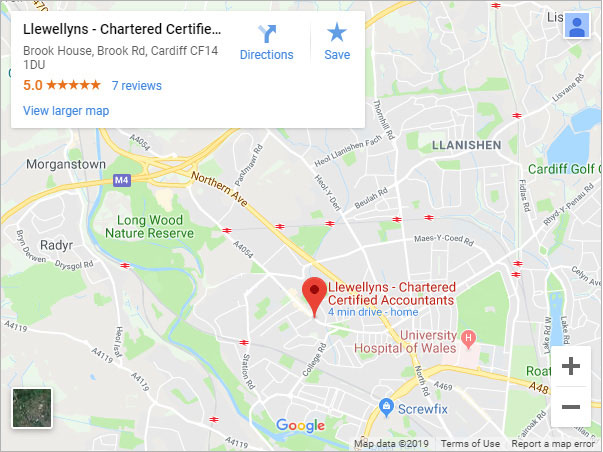
Find Us In Tonypandy
Tel : 01443 303230