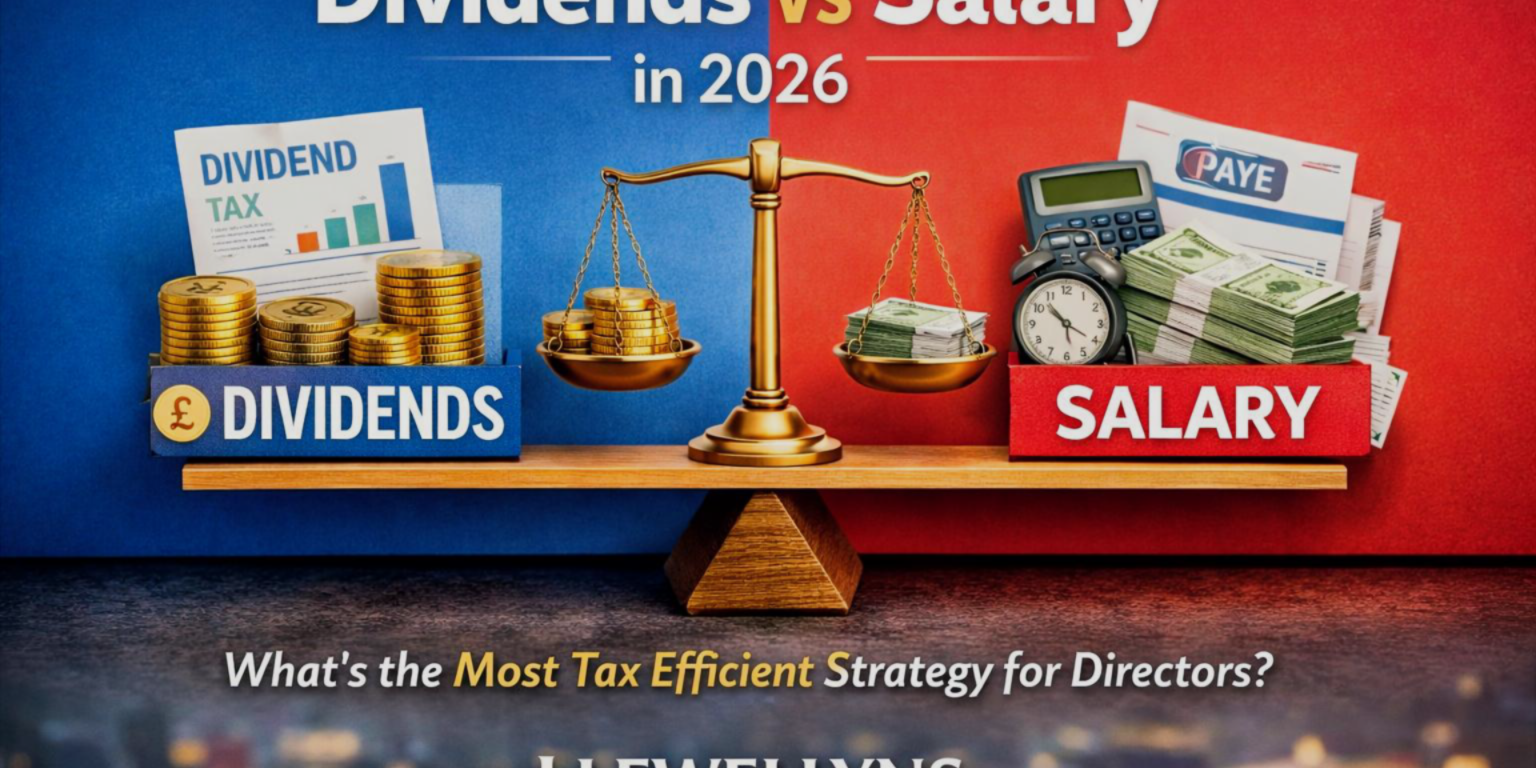
Dividends vs Salary in 2026: What’s the Most Tax Efficient Strategy? 💷📊
If you’re a limited company director, one question comes up every single year:
“Should I pay myself through salary or dividends?”
The honest answer?
It depends.
But in 2026, the margin for error is smaller than ever ⚠️ — and getting this wrong can quietly cost you thousands in unnecessary tax.
Let’s break it down properly.
First: What’s the Difference? 🤔
💼 Salary
Paid through PAYE
Subject to Income Tax
Subject to National Insurance (employee & employer)
Tax-deductible for the company
📈 Dividends
Paid from post-corporation tax profits
No National Insurance
Not tax-deductible for the company
Taxed at dividend rates personally
Both have their place. The key is how they work together, not choosing one over the other.
2026 Tax Position (Key Points) 📅
While rates can change year to year, the structure remains consistent:
Dividend allowance remains significantly reduced compared to previous years
Corporation Tax for many SMEs sits at up to 25%
National Insurance remains a real cost for both the company and director
Personal allowance is still £12,570 (assuming no tapering)
The days of “just take it all as dividends” are long gone.
The Core Principle ⚖️
In most cases, the most tax-efficient strategy in 2026 will be:
✅ A small, tax-efficient salary
➕
✅ Dividends up to your basic rate band (where possible)
Why?
Because this approach:
Protects your State Pension record
Minimises National Insurance
Reduces Corporation Tax
Uses personal tax bands efficiently
It’s structured. Intentional. Strategic.
Why Not Just Take Dividends? 🚫
Dividends feel attractive because:
No National Insurance
Simple to declare
Flexible timing
But remember:
They are paid from profits after Corporation Tax
They don’t reduce the company’s tax bill
You must have sufficient retained profits
They cannot create or increase a loss
If cashflow dips, dividends are the first thing that must stop.
Salary, on the other hand, is deductible — meaning it reduces your Corporation Tax bill.
Why Not Just Take Salary? 🚫
Because:
Employer’s National Insurance increases company cost
Employee’s National Insurance reduces what you receive
Income Tax hits sooner
You can push yourself into higher tax bands faster
For most directors, a full salary approach is rarely optimal.
A Simple Example 📊
Let’s assume:
Company profit before director pay: £80,000
Single director-shareholder
No other income
If you:
Option 1: Take everything as salary
You’ll incur:
Employer NI
Employee NI
Higher Income Tax
The company reduces its Corporation Tax — but total tax leakage is significant.
Option 2: Structured approach
Salary set around NI thresholds
Remaining extracted as dividends within basic rate band
This typically results in:
Lower overall personal tax
Lower NI exposure
Efficient use of allowances
The difference can easily run into several thousand pounds annually 💰
When Dividends May Not Be Right ⚠️
Dividends aren’t always the answer.
They can cause issues where:
You’re applying for a mortgage
You want predictable monthly income
You have fluctuating profits
You’re planning pension contributions
You’re approaching higher-rate tax territory
Extraction planning should align with your wider financial goals — not just tax minimisation.
Planning for April 2026 🔍
With frozen tax thresholds and higher Corporation Tax rates now embedded, directors need to think ahead:
Are you close to higher-rate tax?
Are you building retained profits strategically?
Should you consider pension contributions instead of dividends?
Is your spouse appropriately structured within the company?
This isn’t just about “how much can I take?”
It’s about:
“What is the most efficient long-term strategy for me and my business?”
The Real Answer 💡
There is no universal “best” method.
But there is almost always a more efficient structure than taking money randomly throughout the year.
At Llewellyns, we review director extraction annually — not reactively at year-end, but proactively alongside:
Corporation Tax forecasts
Dividend planning
Personal tax projections
Cashflow forecasting
Because tax efficiency isn’t accidental.
It’s planned.
Final Thought 📌
If you’re paying yourself without a clear structure, you’re likely overpaying somewhere — either personally or corporately.
Small adjustments.
Big long-term impact.
If you’d like us to review your 2026 extraction strategy, we’re happy to take a look.
Please Contact Us To Arrange Your Appointment Before You Arrive
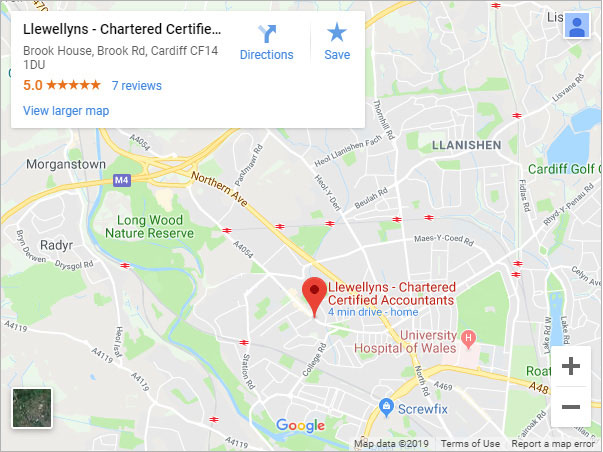
Find Us In Cardiff
Tel : 029 2062 4230
Find Us In Tonypandy
Tel : 01443 303230