
Are You Ready for the 5 April Tax Year End?
Your Final 2025/26 Tax Planning Checklist ⏳
With the tax year ending on 5 April, the window for action is closing.
Once midnight passes, most opportunities are gone.
This isn’t about last-minute panic.
It’s about making sure you haven’t left legitimate tax planning on the table.
Below is a practical, structured checklist to review before the 2025/26 tax year closes.
1️⃣ Pension Contributions 💷
For many business owners and directors, pensions remain one of the most powerful tax planning tools available.
Before 5 April, consider:
Have you maximised your annual allowance (£60,000 for most individuals, subject to tapering)?
Could your limited company make an employer contribution?
Are you close to higher-rate tax this year?
Why this matters:
Personal contributions extend your basic rate band
Company contributions reduce Corporation Tax
Funds grow tax efficiently
A well-timed contribution can reduce both personal and corporate tax in one move.
2️⃣ ISA Allowance 📈
Your ISA allowance for 2025/26 is £20,000.
If unused by 5 April, it is lost. It cannot be carried forward.
ISAs don’t reduce your tax bill today, but they protect investment growth and dividends from future tax.
For directors building long-term wealth, this forms part of a structured extraction and investment strategy.
3️⃣ Dividend Planning 📊
If you operate through a limited company:
Have you utilised your dividend allowance?
Are you close to entering higher-rate tax?
Does it make sense to accelerate or defer dividends?
Dividend timing can materially affect your personal tax position.
But dividends must be supported by retained profits and proper documentation.
4️⃣ Bonus vs Dividend Review 💼
In some cases, a year-end bonus may:
Reduce Corporation Tax
Shift tax bands
Align remuneration with profit levels
However, bonuses trigger National Insurance.
This requires careful modelling, not guesswork.
5️⃣ Capital Allowances & Business Purchases 🧾
Have you:
Purchased equipment this year?
Considered bringing forward planned expenditure?
Reviewed Annual Investment Allowance usage?
Timing capital expenditure before 5 April can reduce taxable profit for the year.
But purchases should be commercially justified, not purely tax driven.
6️⃣ Director’s Loan Accounts ⚠️
If you are a director:
Is your loan account overdrawn?
Are you approaching a Section 455 charge?
Should dividends or salary be declared before year-end?
Ignoring director loan balances can create unexpected tax charges.
7️⃣ Use of Losses 📉
If profits are lower this year:
Can losses be carried back?
Should they be offset against other income?
Is incorporation or structural change worth reviewing?
Loss relief decisions can’t always be undone after the year closes.
8️⃣ Sole Trader Considerations 👤
If you operate as a sole trader:
Are you close to higher-rate tax?
Should pension contributions be increased?
Is incorporation worth reviewing before next year?
With Making Tax Digital for Income Tax approaching, this is also a natural time to review structure.
9️⃣ Spouse & Family Planning 👥
Where appropriate:
Are shareholdings structured efficiently?
Are allowances being fully utilised?
Is income being concentrated unnecessarily?
Family planning must be structured correctly, but when done properly, it can improve overall tax efficiency.
1️⃣0️⃣ Do Nothing — But Know Why 📌
Sometimes the correct decision is no action.
But that decision should be intentional, not accidental.
A short review before 5 April provides clarity.
Final Thought
The tax year end is not about aggressive schemes.
It’s about:
Reviewing what’s within your control
Using available allowances
Structuring extraction properly
Avoiding preventable tax
After 5 April, the planning window closes.
If you would like your 2025/26 position reviewed before the year ends, contact Llewellyns and we’ll assess where you stand.
Small adjustments now can have a lasting financial impact.
Please Contact Us To Arrange Your Appointment Before You Arrive
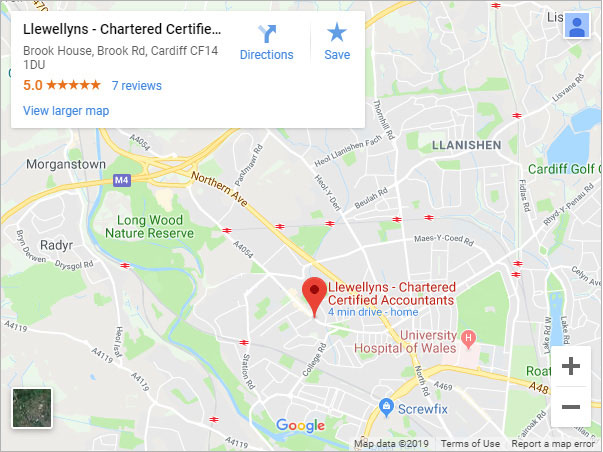
Find Us In Cardiff
Tel : 029 2062 4230
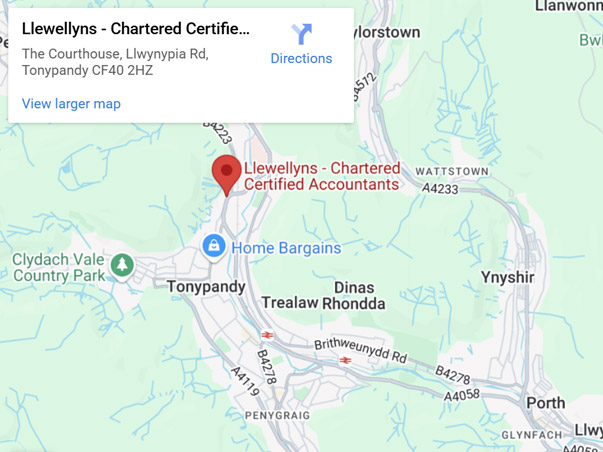
Find Us In Tonypandy
Tel : 01443 303230