Why We Ask So Many Questions Before Giving Tax Advice
When you ask a tax question, you usually want a clear answer.
That is completely understandable.
If you are selling a property, taking money from your company, planning for retirement, buying another business or thinking about changing your structure, you want to know where you stand.
But good tax advice rarely starts with the answer.
It starts with the questions.
At Llewellyns, we will often ask for more background before giving a recommendation. Sometimes that means asking quite a few questions.
That may feel like we are slowing things down, but there is a good reason for it. Tax advice without context can easily lead to the wrong outcome.
The same tax question can have different answers
A piece of tax advice can be technically correct and still not be right for you.
That is one of the most important things to understand about tax planning.
Two people can ask what appears to be the same question, but the right answer may be completely different depending on their circumstances.
For example, the advice on selling a property may depend on:
- who owns the property;
- whether anyone has lived in it;
- how it has been used;
- whether there have been other disposals in the year;
- what reliefs may be available;
- what the owner plans to do next.
The same applies to company directors taking dividends, business owners planning a sale, landlords restructuring property portfolios, or families thinking about succession planning.
The question itself may be simple.
The answer often depends on the bigger picture.
Why we need the full picture
Tax decisions rarely sit on their own.
A recommendation that saves tax in one area may cause problems somewhere else.
It could affect cash flow, mortgage affordability, future tax reliefs, company reserves, family planning, business succession or the timing of a future sale.
That is why we ask questions before giving advice.
We may ask about income, drawings, ownership, family circumstances, future plans, previous transactions, property history, company structure, trusts, partnerships, mortgages or funding requirements.
These questions are not just admin.
They help us understand what is really going on, so that the advice we give is based on your actual position rather than a generic answer.
Compliance and advice are not the same thing
There is also a big difference between compliance work and advisory work.
Compliance is about reporting what has already happened.
That includes preparing accounts, submitting tax returns, filing VAT returns and making sure deadlines are met. It is essential work, but it is usually looking backwards.
Advisory work is different.
It looks forward.
It is about helping you make better decisions before they happen, so that you understand the tax and commercial impact before committing to something.
That is where proper planning can make a real difference.
By the time a transaction has completed, some options may already have been lost. In many cases, the best time to take advice is before the decision is made, not afterwards.
Examples we often see
A company director may ask about the most tax-efficient way to take money from their company.
On paper, that might sound straightforward.
But if they are also planning to apply for a mortgage, bring in another shareholder, buy out a business partner or sell the company in the next few years, the answer may change.
A landlord may ask how to reduce Capital Gains Tax on a property sale.
Again, that may seem like a simple question. But the advice will depend on how the property has been used, who owns it, whether any reliefs apply, whether there have been other gains in the year and what the wider plan is for the portfolio.
A business owner may ask about extracting cash from a company.
But if they are thinking about selling the business in the future, some short-term tax planning options could work against longer-term plans.
In each case, the original question is perfectly reasonable.
The important details are often the ones that have not been mentioned yet.
Good advice starts with understanding the goal
Before giving advice, we need to understand what you are trying to achieve.
Are you trying to reduce tax now?
Improve cash flow?
Prepare for a mortgage?
Build long-term wealth?
Pass assets to your children?
Sell a business?
Retire?
Restructure?
The right advice depends on the goal.
Sometimes the most tax-efficient option is not the most sensible commercial option. Sometimes paying a little more tax in one area can produce a better overall outcome elsewhere.
That is why we take the time to understand the full position before recommending a course of action.
Why this matters
We do not ask questions for the sake of it.
We ask because good advice depends on good information.
The more we understand about your circumstances, the better we can advise you.
It may take a little longer at the start, but it helps avoid rushed advice, missed opportunities and decisions that later become difficult or expensive to unwind.
For business owners, landlords and individuals with more complex tax affairs, this is especially important.
The more moving parts there are, the more important it becomes to take advice before acting.
Speak to Llewellyns
If you are considering a property sale, business decision, company restructure, extraction of profits, succession plan or wider tax planning, it is worth taking advice before the decision is made.
Llewellyns provides tax advisory support for business owners, landlords and individuals across Cardiff, South Wales and the wider UK.
Get in touch with the Llewellyns team to discuss your position.
Please Contact Us To Arrange Your Appointment Before You Arrive
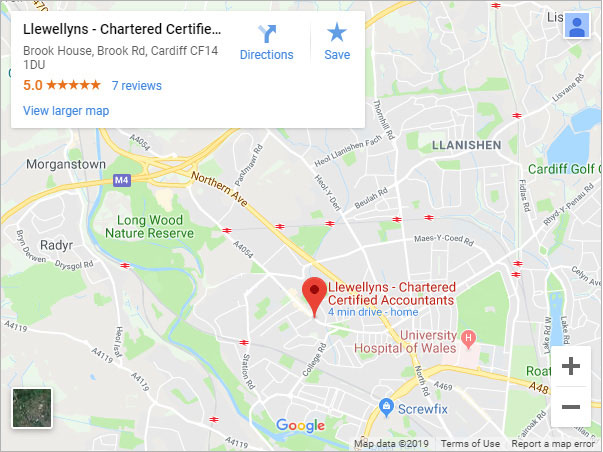
Find Us In Cardiff
Tel : 029 2062 4230
Find Us In Tonypandy
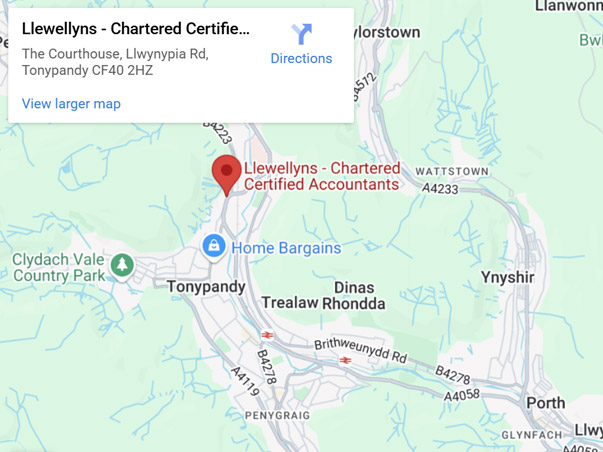
Tel : 01443 303230