Why Your July Tax Payment Shouldn’t Come as a Surprise
For many taxpayers, July brings an unwelcome reminder from HMRC.
The second Self Assessment payment on account is usually due by 31 July, and for sole traders, landlords and company directors, it can create real pressure on cash flow if it has not been planned for properly.
The issue is not always that the payment is unexpected.
Often, people know it is coming.
The problem is that the money has not been set aside, the figure has not been checked, or the business bank balance has been treated as available cash when some of it should have been reserved for tax.
That is where problems can start.
What is the July payment on account?
Payments on account are advance payments towards your next Self Assessment tax bill.
Instead of paying the full amount in one go after the tax year has ended, HMRC usually asks certain taxpayers to make two payments during the year.
These are normally due on:
- 31 January;
- 31 July.
Each payment is usually based on half of the previous year’s tax bill.
So, if your last Self Assessment bill was £6,000, HMRC may ask for two payments on account of £3,000 each towards the following year.
The first payment is normally due on 31 January, along with any balancing payment for the previous tax year.
The second payment is then due on 31 July.
It is not an extra tax bill
One of the most common misunderstandings is that the July payment is an extra tax charge.
It is not.
It is usually the second instalment of tax being paid towards the current tax year, based on the previous year’s liability.
That does not make it any less painful from a cash flow point of view, but it is important to understand what it represents.
The July payment is not HMRC suddenly adding something new. It is part of the Self Assessment payment cycle.
However, because it falls in the middle of the year, it can still catch people out.
Why people get caught out
There are a few common reasons why the July payment causes problems.
Some taxpayers simply forget about it after dealing with the January deadline.
Others know it exists but do not check the amount until very close to the deadline.
For sole traders and landlords, income can fluctuate during the year, which makes it harder to know how much cash to keep aside.
Company directors can also be affected, particularly where dividends, rental income, savings income, child benefit charges or other income fall within Self Assessment.
The issue is often not the tax system itself.
It is the lack of planning around the tax system.
If money has not been reserved throughout the year, the July payment can feel like a sudden hit to personal or business cash flow.
Your bank balance is not the same as available cash
This is one of the most important habits for business owners and landlords to develop.
The money in your bank account is not necessarily yours to spend.
Some of it may already belong to HMRC.
That may include Income Tax, National Insurance, VAT, PAYE, Corporation Tax or future Self Assessment payments.
If all income is treated as available cash, tax payments will always feel more painful than they need to.
A simple tax reserve can make a significant difference.
That does not need to be complicated. It may be a separate savings account, a regular transfer, or a monthly review of likely tax liabilities.
The key point is to stop treating tax as something to think about only when the deadline arrives.
Should your July payment be reduced?
In some cases, the July payment on account may be too high.
This can happen if your income has fallen compared with the previous year, your profits are lower, or more tax has already been deducted at source.
Where that applies, it may be possible to ask HMRC to reduce the payment on account.
This can be useful, but it needs to be done carefully.
If the payment is reduced too much and your final tax bill is higher than expected, HMRC may charge interest on the shortfall.
So before reducing the July payment, it is worth reviewing your current year figures properly.
That means looking at income, expenses, profit, dividends, rental income and any other relevant tax factors.
A reduction should be based on evidence, not guesswork.
What should you check before 31 July?
Before making the July payment, it is worth checking:
- whether a payment on account is actually due;
- the amount showing on your HMRC account;
- whether the figure is based on last year’s liability;
- whether your current year income is likely to be lower;
- whether a reduction may be appropriate;
- whether you have the cash available;
- whether you need to speak to HMRC if payment will be difficult.
For landlords and sole traders, this is also a good time to update your bookkeeping.
If your records are several months behind, it becomes much harder to know whether the July payment is reasonable.
Up-to-date records give you a much clearer picture.
What if you cannot pay?
If you cannot pay your Self Assessment bill on time, it is important not to ignore it.
HMRC may charge interest and penalties where tax is paid late.
The sooner the issue is addressed, the more options you are likely to have.
Depending on the circumstances, it may be possible to contact HMRC or arrange a payment plan.
But this should not be left until the last minute.
If you already know the July payment will be a problem, take advice early and understand your options before the deadline passes.
How to avoid the same issue next year
The best time to deal with a July tax payment is not July.
It is throughout the year.
Good tax planning is often about building better habits:
- keep bookkeeping up to date;
- review profits regularly;
- set money aside for tax;
- check your Self Assessment position before deadlines;
- review whether payments on account are reasonable;
- avoid taking all available cash out of the business;
- speak to your accountant before the payment becomes urgent.
For business owners, landlords and company directors, tax should be part of cash flow planning, not a separate issue dealt with twice a year.
A better way to manage tax cash flow
One useful approach is to review your likely tax position every quarter.
That does not have to mean preparing a full tax return four times a year.
It simply means having a clearer idea of what income has been earned, what expenses have been incurred, what profit is building up and what tax may be due.
This helps you avoid relying on guesswork.
It also makes it easier to spot issues early, such as falling profits, higher drawings, unexpected liabilities or insufficient tax reserves.
In many cases, the value is not just in reducing tax.
It is in avoiding surprises.
How Llewellyns can help
At Llewellyns, we help sole traders, landlords and company directors understand their Self Assessment position and plan properly for tax payments.
That may include reviewing payments on account, checking whether a reduction is appropriate, updating bookkeeping, estimating future liabilities or putting a better tax reserve process in place.
The aim is simple.
Tax payments should be planned for, not discovered at the last minute.
Speak to Llewellyns
If your July tax payment is causing concern, or if you are unsure whether the amount due is correct, it is worth reviewing your position before the deadline.
Llewellyns can help you understand your Self Assessment bill, check whether your payment on account is reasonable and plan ahead for future tax liabilities.
Get in touch with the Llewellyns team to discuss your position.
Please Contact Us To Arrange Your Appointment Before You Arrive
Find Us In Cardiff
Tel : 029 2062 4230
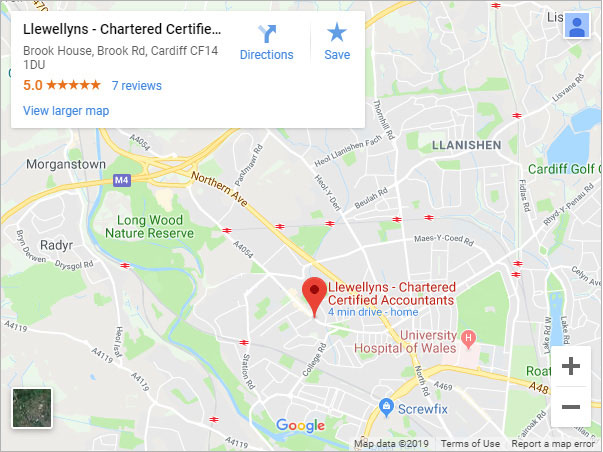
Find Us In Tonypandy
Tel : 01443 303230