Taking Money Out of Your Limited Company in 2026: Salary, Dividends, Loans and Pensions 💷🏢
Your company has £50,000 sitting in the bank.
Can you just transfer it to yourself?
Unfortunately, no. 😅
A limited company is legally separate from its owners, so money in the company bank account belongs to the company, not automatically to the director.
There are several legitimate ways to take money out, but each has different tax consequences.
Here are the main ones. 👇
💼 1. Salary
If you’re a director working for the company, it can pay you a salary through PAYE.
Salary is generally an allowable business expense for Corporation Tax purposes, but Income Tax and National Insurance may become payable depending on how much you receive.
For 2026/27, the standard Personal Allowance remains £12,570, while employer’s National Insurance is generally charged at 15% on earnings above the relevant employer threshold.
This is why there isn’t one perfect salary that every company director should automatically take.
The right amount can depend on:
✅ Other income you receive
✅ Whether Employment Allowance is available
✅ The company’s Corporation Tax position
✅ Your National Insurance record
✅ Whether the company has other employees
Copying somebody else’s director salary from the internet isn’t tax planning! 😂
📈 2. Dividends
Dividends are probably the method most company owners are familiar with.
A company can pay dividends to its shareholders where it has sufficient distributable profits available.
Unlike salary, dividends don’t reduce the company’s Corporation Tax bill.
The shareholder may then pay Dividend Tax personally.
For 2026/27, the Dividend Allowance is £500, with dividends above the available allowance potentially taxed at:
🔹 10.75% basic dividend rate
🔹 35.75% higher dividend rate
🔹 39.35% additional dividend rate
Dividends should also be properly documented.
Simply transferring £10,000 from the company account and deciding at the end of the year that it was a dividend isn’t the way we’d recommend doing things!
🏦 3. Director's Loan Account
A Director’s Loan Account records money moving between you and your company which isn’t salary, a dividend, expense reimbursement or another normal payment.
There are two very different situations.
The company owes you money
Perhaps you personally paid £20,000 into the company when it started.
If the company later repays that £20,000 to you, this will generally just be repayment of money it already owes you rather than taxable income.
You owe the company money
This needs more care.
If you take money out of the company which isn’t otherwise salary, dividend or another legitimate payment, your Director’s Loan Account may become overdrawn.
If an overdrawn loan remains outstanding more than nine months after the end of the company’s Corporation Tax accounting period, the company can face a temporary Corporation Tax charge of 33.75% of the outstanding loan.
Loans exceeding £10,000 can also create additional tax consequences where interest isn’t charged at the appropriate rate.
In other words:
Your Director’s Loan Account shouldn’t be treated as a second current account. 🚨
👴 4. Pension contributions
This is often overlooked.
Instead of taking all available profits personally, a company can potentially make employer pension contributions for a director.
Where the relevant conditions are met, employer pension contributions can generally be deducted when calculating the company’s taxable profits, potentially reducing its Corporation Tax bill.
That can make pensions particularly attractive for directors who:
✅ Don’t need all of the company’s profits personally today
✅ Want to build retirement savings
✅ Are approaching higher Income Tax bands
✅ Want to extract value from the company efficiently over the longer term
There are, of course, pension contribution limits and other rules to consider, so this is something to plan rather than simply transferring a large amount at the year end.
🧾 Don't forget expenses
If you’ve personally paid genuine business expenses on behalf of the company, the company can normally reimburse you.
For example:
🚗 Business mileage
🏨 Business travel
💻 Equipment purchased personally for the company
📱 Certain business costs
That’s fundamentally different from simply taking money from the company for personal use.
Keeping good records makes this considerably easier.
🤔 So what's the most tax-efficient way?
Usually, a combination.
For many owner-managed companies, the answer might involve:
💼 An appropriate salary
📈 Dividends
👴 Employer pension contributions
🏦 Repayment of money owed to the director
🧾 Reimbursement of genuine business expenses
But the optimum mix depends on the director’s personal circumstances and what they actually need the money for.
A director who needs £70,000 personally this year may need a very different strategy from somebody whose company makes the same profit but only needs £35,000 to live on.
✅ Don't just look at the company bank balance
This is probably the most important point.
Cash in the bank isn’t the same thing as profit available to withdraw.
Before taking significant sums from a company, you need to consider:
🔹 Corporation Tax still to be paid
🔹 VAT and PAYE liabilities
🔹 Existing Director’s Loan Account balances
🔹 Whether sufficient profits exist to pay dividends
🔹 The director’s wider personal tax position
🔹 How much cash the business needs to retain
Taking £30,000 out today and discovering six months later that £20,000 of it was needed for tax isn’t particularly fun. 😅
📞 Want to know how much you can safely take from your company?
At Llewellyns Chartered Certified Accountants, we can look at your company profits, cash position and personal circumstances and help determine the most appropriate way to extract money from the business.
Good tax planning isn’t simply about finding the lowest rate today.
It’s about making sure the company, the director and the longer-term plan all work together.
📍 Cardiff: 02920 624230
📍 Tonypandy: 01443 303230
📧 info@llewellyns.co.uk
Please Contact Us To Arrange Your Appointment Before You Arrive
Find Us In Cardiff
Tel : 029 2062 4230
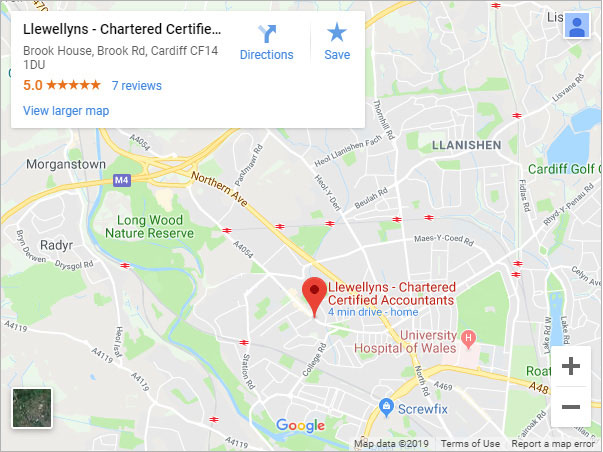
Find Us In Tonypandy
Tel : 01443 303230